
Skip to Main Content
FinTech

When Partners Become the FinTech Growth Engine

Key Takeaways

  • Channel partnerships have become the primary growth engine for FinTech firms that want to scale reach, enter new markets and improve growth efficiency.
  • 97% of high-growth FinTechs plan to prioritize channel investments, signaling a broad shift toward partner-led growth strategies.
  • Define program strategy and objectives around target segments, partner profiles and routes to market before expanding partner ecosystems.
  • Focus partner recruitment on high-ROI relationships that deliver measurable growth rather than maximizing the number of partner agreements.
  • Measure sourced, influenced and incremental revenue to understand how partners create value and guide AI-enabled performance management.
Key Topics
Close

What Alexander Group’s 2026 FinTech Channel Partner Study Reveals About Partnerships and What It Means for Leaders

For most FinTech companies, the fastest path to the next stage of growth has redirected itself. Instead of growth primarily coming from the direct sales team, it now runs straight through partners. In fact, Alexander Group’s 2026 FinTech Channel Partner Study revealed that channel sales will overtake direct sales in the next three years.

Instead of waiting to navigate this market shift, the fastest-growing firms are starting to deliberately invest in partner networks so that they can scale reach, enter new segments and, critically, grow more efficiently.

The new research delves into which companies are turning partnerships into a real growth engine, and how exactly they’re structuring their programs to get there.

Partnerships Move to the Center Stage

Today’s FinTech leaders are choosing to treat partnerships as a core growth lever, instead of simply a nice-to-have. The study revealed three key findings to support this:

  1. 77% of leaders say that channel partners are a very important strategic priority
  2. 87% expect to increase partner-program investment within the next two years
  3. 97% of high-growth FinTechs plan to prioritize channel investments

Now there are familiar pressures driving this increased investment, specifically AI. In an AI-enabled market, the expectation is to close deals faster and reach segments that organizations couldn’t serve alone. Partnerships give FinTechs a way to scale quickly and move into new segments without building every capability in-house.

Companies are catching on to how much more they can do through the right partners and are planning accordingly.

The Framework Behind the Findings

Although most FinTech leaders already sense that partnerships matter more than they used to, it’s less clear to determine how competitive their programs are relative to industry practices. That blind spot is what the study sought to fill.

To give leaders a clear benchmark on what their fellow FinTech organizations are doing, Alexander Group surveyed more than 100 FinTech commercial executives and asked a simple set of questions related to the changes organizations were making to their partner programs, what their top priorities were for the next 12 to 18 months and if the program is keeping pace with the rest of the FinTech field.

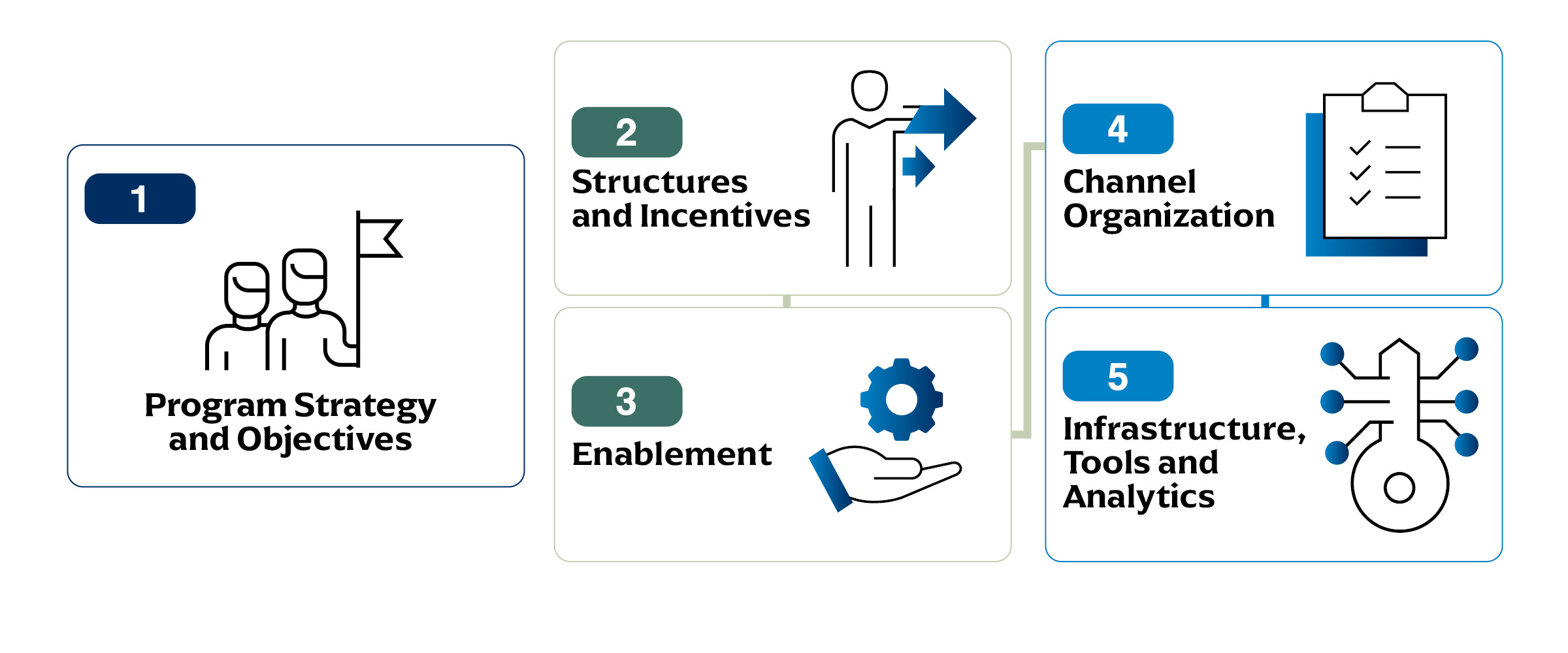
The findings revealed that commercial leaders identified five key partner program factors critical to success:

  1. Program Strategy and Objectives: Identifying goals, target segments and ideal partner profiles.
  2. Structure and Incentives: Shaping partner behavior through tiering, terms and the financial and non-financial rewards.
  3. Enablement: Helping partners sell through training, certification and content.
  4. Channel Organization: Supporting the channel through roles and coverage models
  5. Infrastructure, Tools and Analytics: Measuring it all through deal registration, portals and metrics
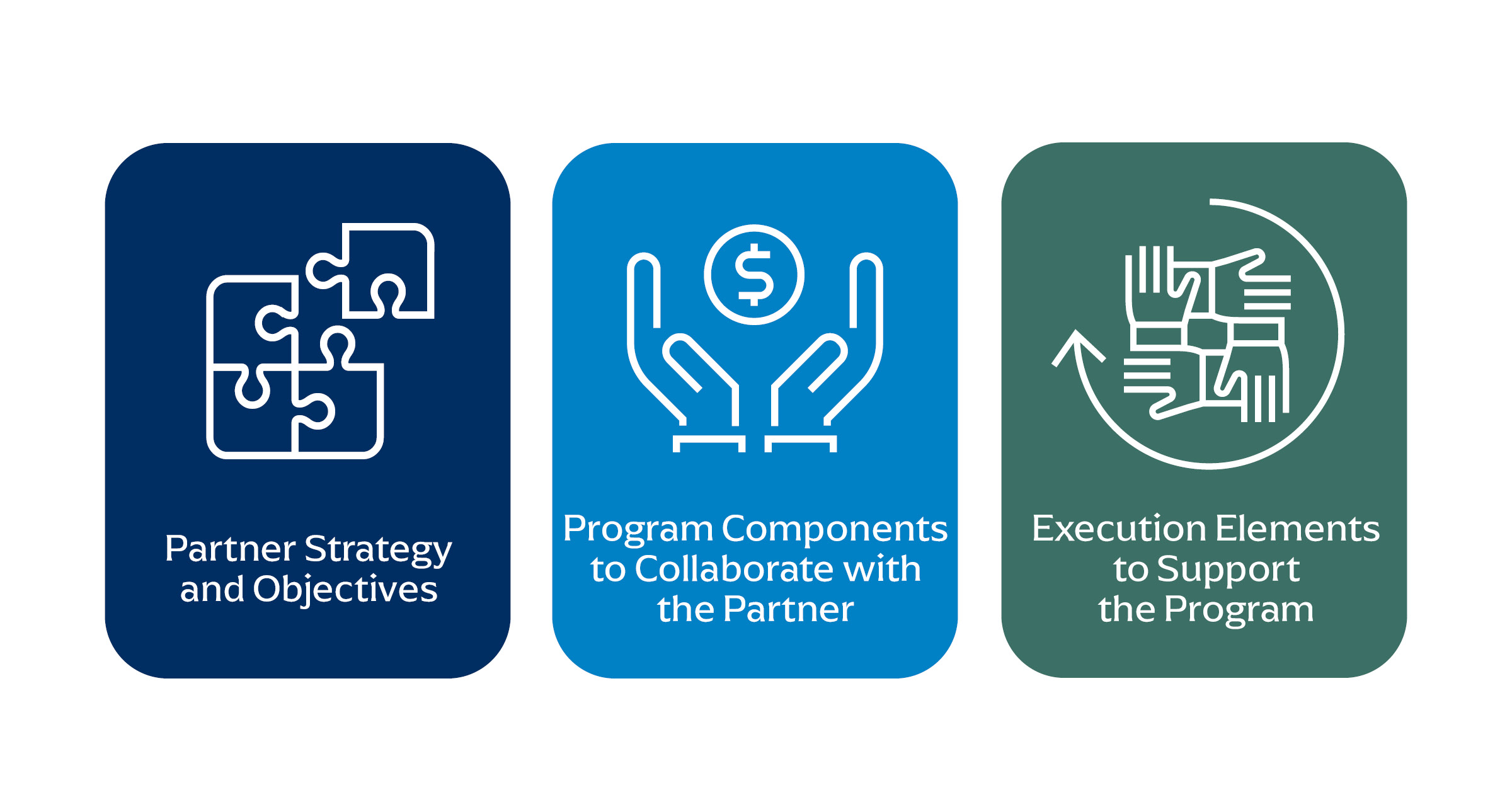
These five components match well to Alexander Group’s channel partner initiative framework, which can be looked at through three lenses:

It starts with strategy and objectives: determining the right routes to market by segment, the role partners should play and the types of partners best positioned to support the strategy. From there, we design the partner program itself, including how relationships are structured, incentivized and enabled. Finally, we define the operating model behind it all, including the roles, tools, processes and data required to run and scale the program effectively.

Ultimately, the study revealed that there’s a clear divide between companies that are proactively applying this framework to their strategic advantage and those that are struggling to realize its full value.

Four Game-Changing Moves to Consider

FinTech companies that are winning with their partner programs are running a different playbook, and this is what their peers could learn from their deliberate moves:

1. Zero in on finding the right partners

Signing as many partners as possible isn’t a viable strategy in today’s market. The best vendors now work with a smaller set of high-ROI partners and hold each one accountable for growth and returns. Partnerships have evolved from a scale play to a performance-driven strategy, where success is determined by the value partners deliver, not the number of partners engaged.

2. Make the returns worth it to partners

As companies expect more from their partners, leading organizations are rethinking what they provide in return. To drive the right behaviors, they are tailoring incentives and certifications to specific partner roles and business objectives. The need for change is evident: while 57% of companies plan to increase investment in partner incentives, only 45% believe their current incentive programs are effective.

3. Shift from generalist coverage to specialized expertise

Historically, a single channel manager owned the partner relationship end-to-end. Today, leading organizations are breaking that role into specialized functions, such as partner marketing, customer success and solution engineering, designed to better support partner activation and scale. However, specialization alone is not enough. Nearly half of companies report friction between direct and channel teams, highlighting the need for clearly defined roles, coverage models and incentives that encourage collaboration rather than competition.

4. Measure how partners create value, not just what they sell

Leading FinTech organizations have started to ask more questions beyond how much a partner sold. They want to know how the partner created revenue, what it earned and how much influence the partner really had in the process. Essentially, they’ve moved from tracking one top-line number to now following sourced, influenced and incremental revenue. And AI only makes this sharper: More than 50% of high-growth firms are now investing in AI, largely to strengthen segmentation, targeting, forecasting and partner performance analysis.

To win, FinTech firms are reengineering their programs to grow profitably and keep up with an ecosystem that keeps getting more complex.

Reflection is the First Step

Partnerships are a major growth lever, but many FinTech organizations are still in the process of building the capabilities needed to unlock their full potential. If we’re honest, most are not quite there yet. Before restructuring roles, programs, or incentives, it’s worth stepping back and reflecting on five key questions:

  • Are our partners moving us closer to our strategic goals, or just adding volume?
  • Do our incentives reward the behaviors that drive profitable growth?
  • Is our channel organization working with the direct team, or against it?
  • Have we enabled and activated partners well enough to scale?
  • Are we using data and AI to manage partner performance with real precision?

These questions may reveal more gaps than expected, but that’s where the real work begins. The companies pulling ahead did not get there by simply adding more partners or maintaining the status quo. They closed the gap between their growth ambitions and partner strategy by aligning incentives, clarifying roles and building capabilities partners need to scale and deliver results.

This is the Work Alexander Group Does with FinTech Leaders Every Day

Understanding where your partner program stands is the first step toward improving it. Alexander Group can help you evaluate your strategy, program and operating model against the 2026 study findings, identify gaps and develop a practical plan to strengthen partner performance and accelerate growth.

Back to Top