Life Sciences
Sales Compensation Must Evolve With Today's Life Sciences Commercial Models
That is the real test for commercial leaders heading into the next planning cycle. The plan should not just pay people after the strategy works. It should help make the strategy work.
Commercial Priorities Change Across the Product Lifecycle
For biotech and pharma organizations, compensation design becomes increasingly complex as products move from launch to maturity.
The traditional physician-focused commercial model has evolved into a broader, more coordinated customer engagement approach. Today’s commercial teams often include sales representatives, market access organizations, patient support teams, reimbursement specialists, key account managers and medical science liaisons (MSLs)—each influencing different points within the customer journey.
Cross-functional models create a harder compensation question: How do leaders keep pay tied to performance while staying inside strict regulatory and compliance boundaries?
Questions that once seemed straightforward have become more nuanced:
- How much upside is appropriate?
- How should top performers be rewarded?
- Which outcomes should be measured?
- How can organizations balance motivation, compliance and cost management?
The answer starts with a simple principle: Compensation should reinforce the outcomes that matter most. Product launches make that principle harder to apply.
New therapies, diagnostics and indications create real forecast uncertainty. Adoption rates, payer dynamics, reimbursement friction and access hurdles can move performance sharply in the first months after launch.
That makes a standard quota plan risky in the early launch window.
Many organizations are exploring alternatives such as:
- Short-term commission structures during launch phases
- Team-based measures to manage uncertainty
- Planned compensation evolution as products mature
- Different incentive approaches across lifecycle stages
The key is recognizing that launch compensation shouldn’t remain static. Plans often need to evolve as product adoption becomes more predictable and market conditions stabilize.
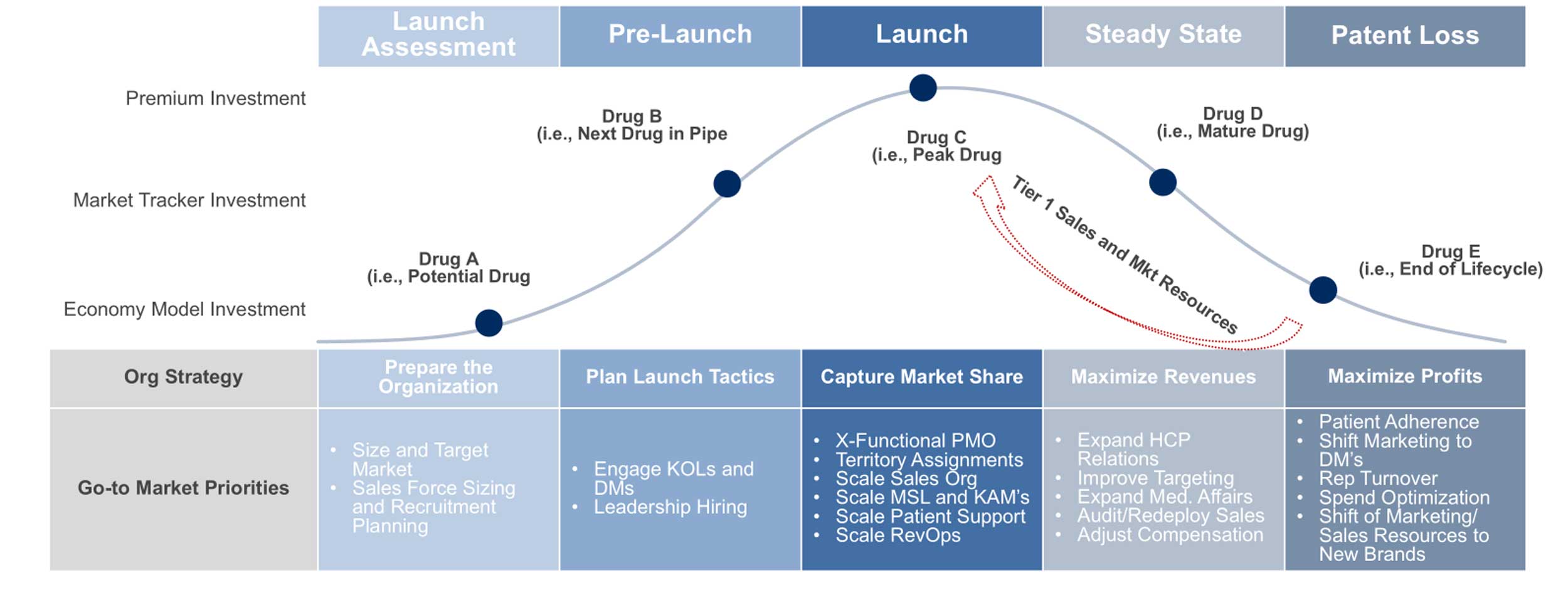
Figure 2: Sales compensation should evolve with the drug lifecycle
Launch measures shouldn’t live forever. Early plans may need to reward adoption, access progress or team execution. Mature products may need stronger links to profitability, share growth or portfolio performance. The plan has to move as the business moves.
Growth Requires More Than Relationship Management
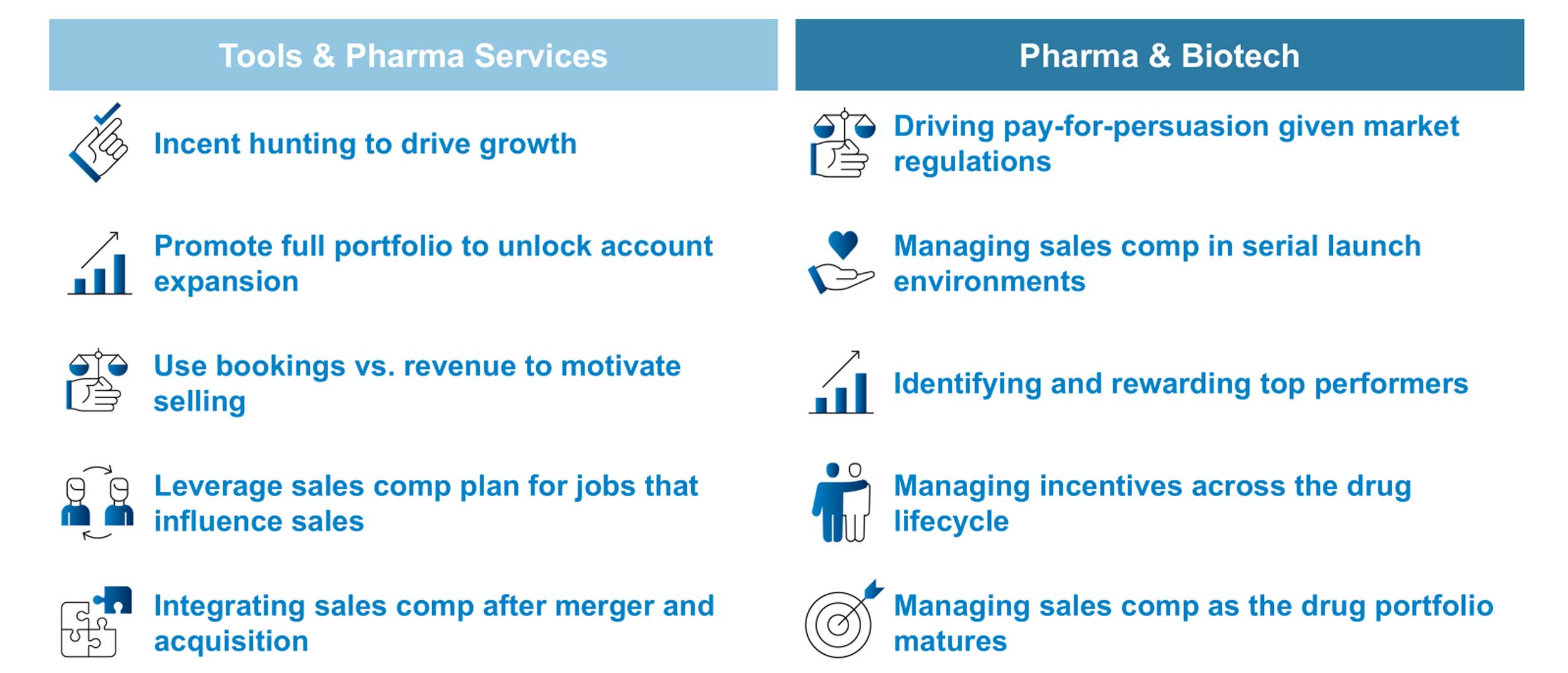
Life sciences tools, CRO, CDMO and services businesses face a different pressure. They need growth in markets where relationships still matter, but relationships alone don’t create enough momentum.
Portfolio expansion raises the stakes within each business model. Tools companies may ask sellers to connect instruments, consumables, software and services more effectively. CROs, CDMOs and other services businesses may push teams to expand across capabilities, sites or buying centers. The common challenge is that sellers need to know which growth paths matter most inside the accounts they cover.
This changes the seller’s job. The goal is no longer only to sell a product. Teams need to expand share of wallet, elevate strategic offerings and find cross-sell opportunities inside accounts they already know. The compensation plan has to make those priorities visible.
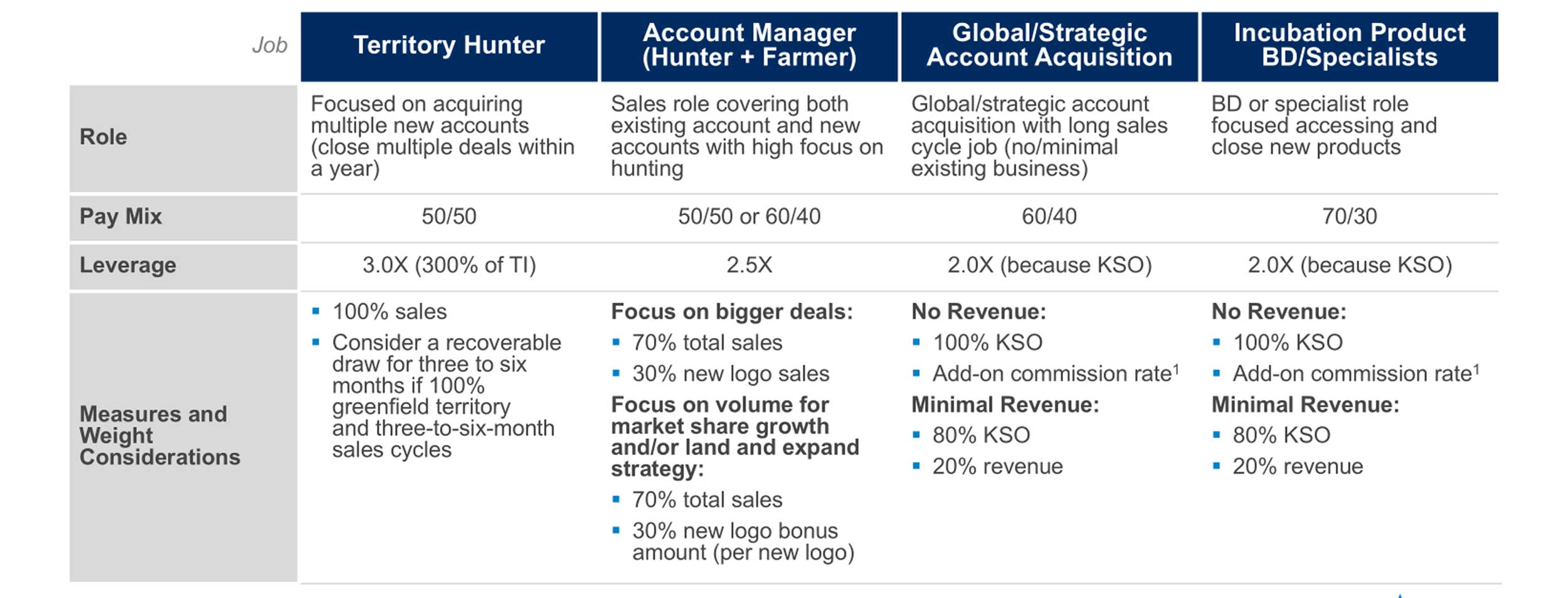
As portfolios mature, sellers can drift toward protecting existing revenue instead of creating new demand. Leaders are responding by putting more weight on new customers, account expansion and business development activity. The right answer varies by role. Territory hunters, strategic account leaders, account managers and product specialists influence revenue in different ways, so their plans should not all look the same.
Companies are using strategic product measures, product-specific incentives, crediting adjustments and targeted bonus opportunities to direct focus. The risk is complexity. Too many measures, exceptions and overlapping goals weaken the signal. Strong plans point sellers to the right growth without making the plan harder to understand.
Figure 3: Hunter plans should reflect the role and sales cycle
Measure What Sellers Truly Influence
If growth is one side of effective compensation design, accountability is the other.
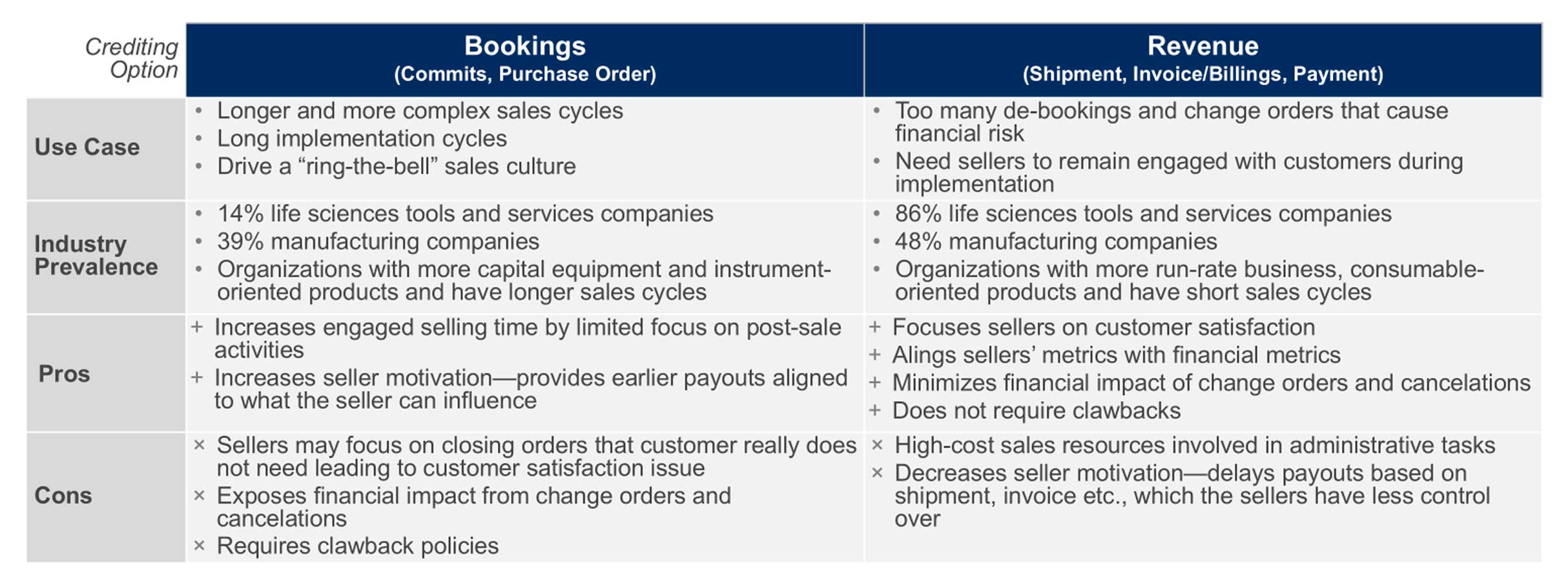
Few compensation choices shape behavior more than the crediting event. The bookings-versus-revenue debate is the clearest example. Revenue-based plans remain common because they tie payouts to realized financial outcomes and reduce exposure to cancellations, contract changes and implementation delays.
Organizations with long sales cycles, capital-intensive purchases or complex service engagements face a different reality. Seller influence often happens months before revenue shows up.
Bookings can create a tighter link between commercial effort and reward. Sellers get credit for outcomes they directly influence instead of waiting for revenue recognition. That choice requires stronger governance, including clawback provisions, de-booking rules and clear crediting adjustments.
There is no universal answer. The right measure depends on the sales cycle, customer buying process, implementation complexity and the seller’s role after the deal closes.
Leaders also need to decide which roles belong in incentive plans.
Eligibility used to center on quota-carrying sales roles. That line is less clean now. Field application scientists, technical specialists, customer-facing support teams and other commercial-adjacent roles often shape the customer experience and influence buying decisions.
The better question is no longer, “Does this role carry a quota?” It is, “Does this role have measurable influence on business outcomes?”
When incentive eligibility follows true commercial influence, teams coordinate better and leaders create clearer accountability. Compensation should follow where value gets created.
Figure 4: The right crediting event depends on the selling model
Compensation Should Make the Strategy Easier to Execute
The best sales compensation programs do more than reward performance. They make choices clear. They tell teams where to focus, which growth bets deserve attention and how success should be measured as markets, products and customer needs change.
That is why compensation design deserves a different conversation. Leaders should not ask only, “How do we pay the field?” They should ask, “What behavior are we trying to create?” If the answer is launch adoption, portfolio expansion, new customer acquisition or booked revenue, the plan needs to say that clearly.
Commercial models will keep changing. The companies that outperform will not treat compensation as a year-end mechanics exercise. They will use it as a growth system: simple enough for sellers to understand, sharp enough to change behavior and flexible enough to move with the business.