People don’t move from hearing something to doing something in one clean step. They’ll interpret it, question it and compare it to the last time sales compensation rollout. People will also ask whether they can actually win under it. And they’re looking to their manager for the answers. Communication is necessary, but it’s not sufficient enough to change behavior on its own. You can explain a plan with perfect clarity and still fail to change a single behavior if nobody trusts it, personalizes it or sees it reinforced.
The Three Omens That Confirm Your Sales Comp Rollout Is A Bust
Many rollouts break down at these common fault lines:
Trust erodes.
“This feels unfair, unclear or constantly changing.”
Reps doubt the plan’s fairness and disengage before they ever sell against it. Mixed messages, unclear mechanics and skepticism about earnings opportunity create doubt long before the first commission check arrives. And once trust is lost, every payout is scrutinized, every change is questioned and adoption becomes an uphill battle.
Reinforcement fails.
“My manager can’t explain what’s changing or answer our questions.”
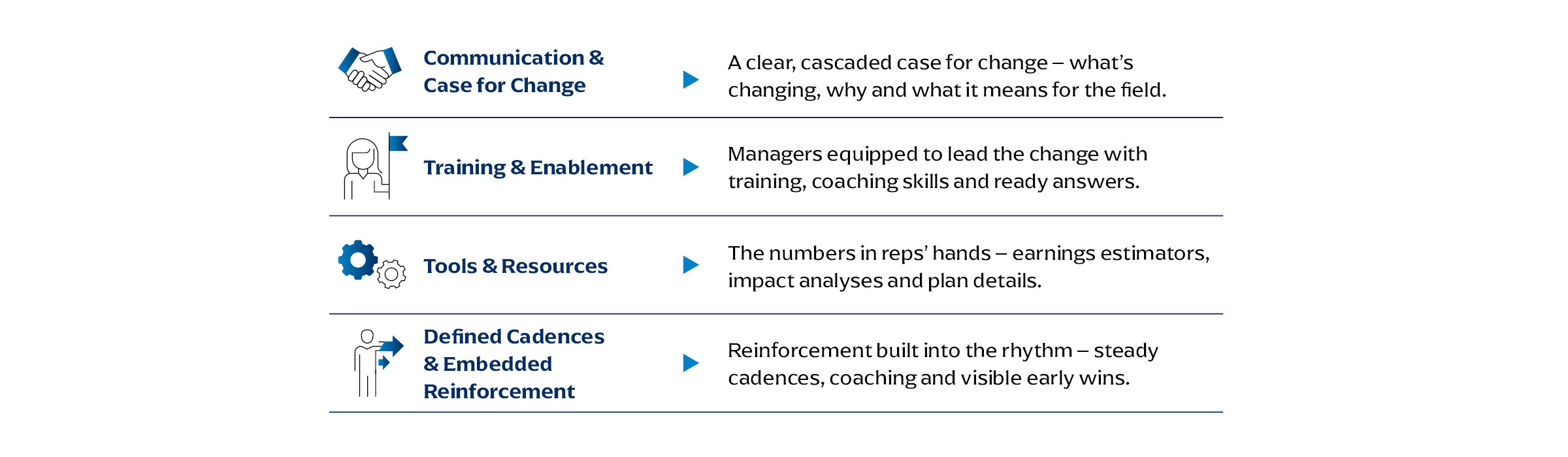
One rep’s manager had received nothing more than a high-level deck. When her earnings didn’t add up, she went to her manager, then to RevOps. Neither could do the math to prove her wrong, and she disengaged from the plan entirely. That story isn’t an anomaly; that’s the predictable result of under-equipping the people closest to the field.
Action stalls.
“I don’t know what this means for me. What do I need to do differently?”
Say that the plan introduces a new product measure, which is one of the most common reasons plans change in the first place. A new measure equals to new call points and new skills that reps may not feel ready to execute. Without the right preparation, they quietly opt out from the new measure and keep selling what they already know how to sell.
Each one of these omens also shed light on opportunities where managers can help inspire their teams and succeed on a new plan.
The Manager’s Paradox: We Demand Everything and Equip Nothing
92% of leaders say managers are critical to change success, yet only 18% believe their managers are equipped to lead it. When you ask managers themselves to rank “leading change” against their other responsibilities, it barely registers as a priority at all. This is a pattern our broader FLSM research confirms, where leading change consistently ranks near the bottom of what managers see as their core job.
We’ve made managers accountable for the single hardest part of the rollout but have given them, at best, a deck and a memo to do it with. While some leadership would like to call that a change strategy, that’s just magical thinking dressed up as a communication plan.
So Why Will Your Rollout Fail?
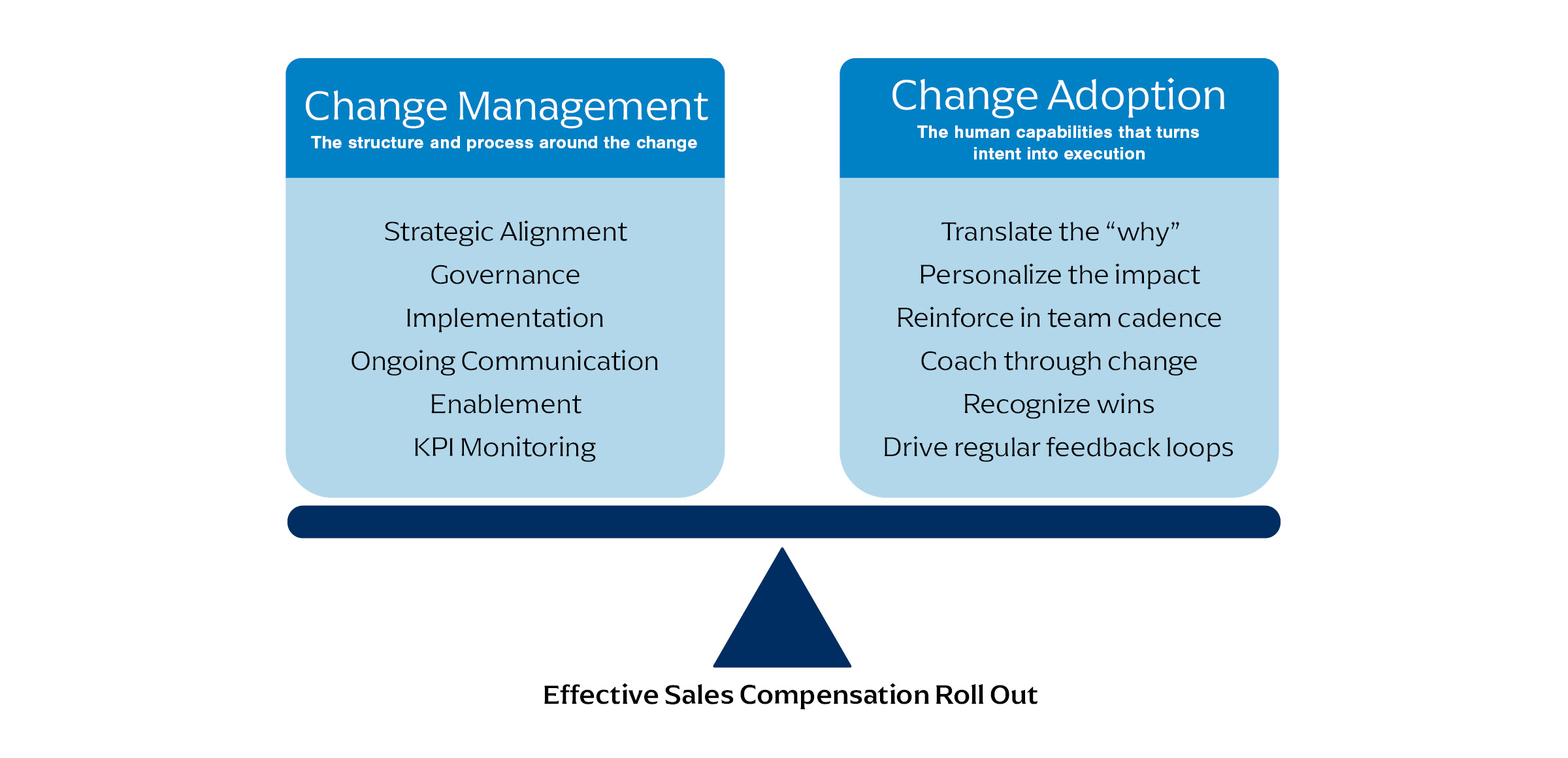
It’s not because your plan design team didn’t work hard enough. Organizations consistently focus on change management—governance, communication cascades, implementation timelines—while systematically underinvesting in change adoption: the human capability that turns intent into seller behavior. Even though change management gets the plan launched, change adoption ensures the plan sticks long-term. However, most companies only build the first system.