Article
The Role of AI Talent Readiness in AI Portfolio Success
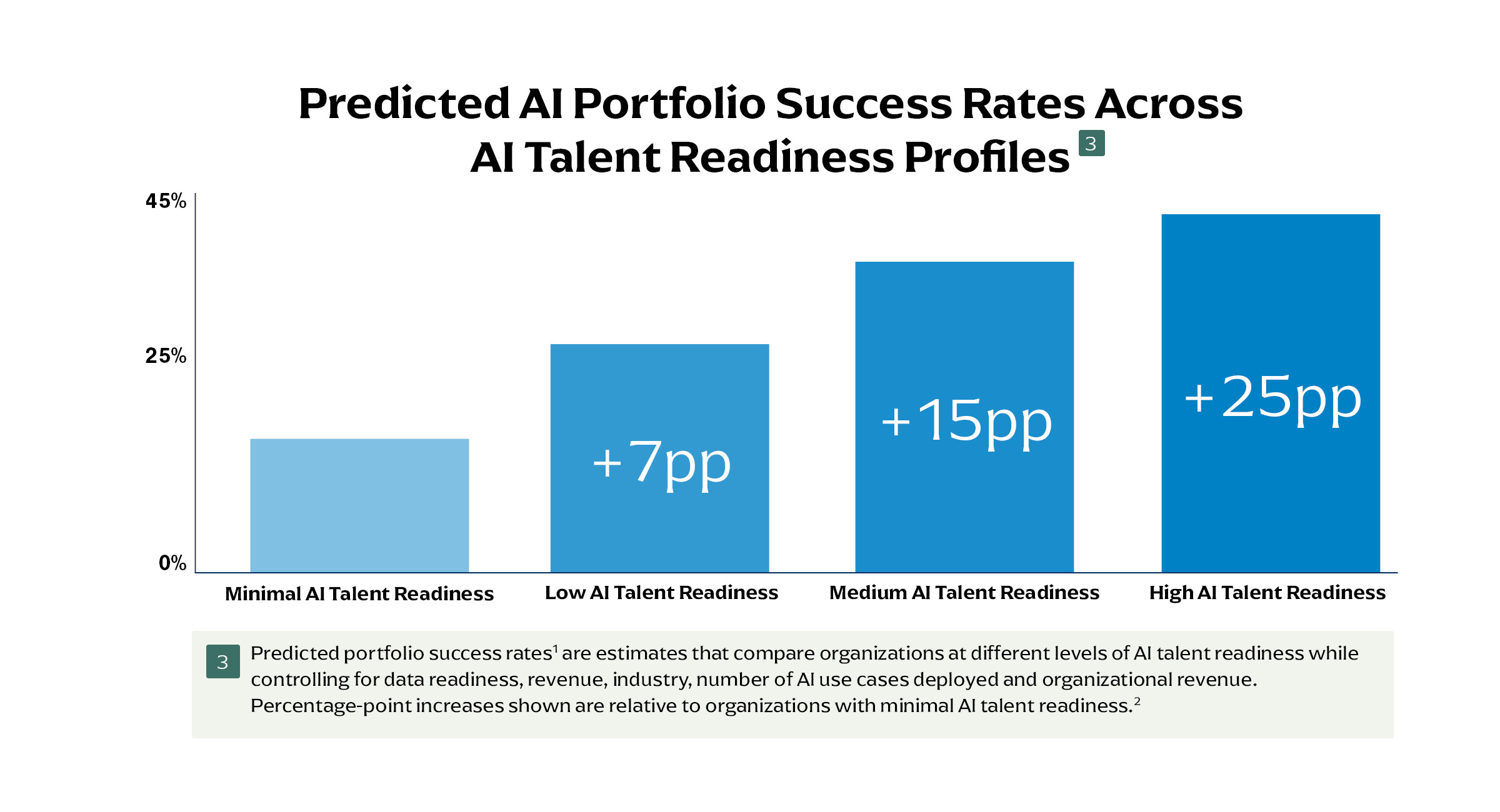
As AI adoption continues to expand, AI talent readiness will play an increasingly important role in determining whether organizations capture the full value of their AI investments. Let’s examine the specific units that make up AI talent readiness and the actions sales leaders can take today to strengthen AI adoption as well as improve sales outcomes.
Components of AI Talent Readiness
While AI training, AI change management and adoption, and sales training represent the three foundational capabilities of AI talent readiness, each includes multiple practices that influence the likelihood of employees effectively adopting and applying AI. As AI becomes more deeply embedded in commercial processes, companies must continuously develop these capabilities to keep pace with changing technologies, workflows and customer expectations.
AI Training
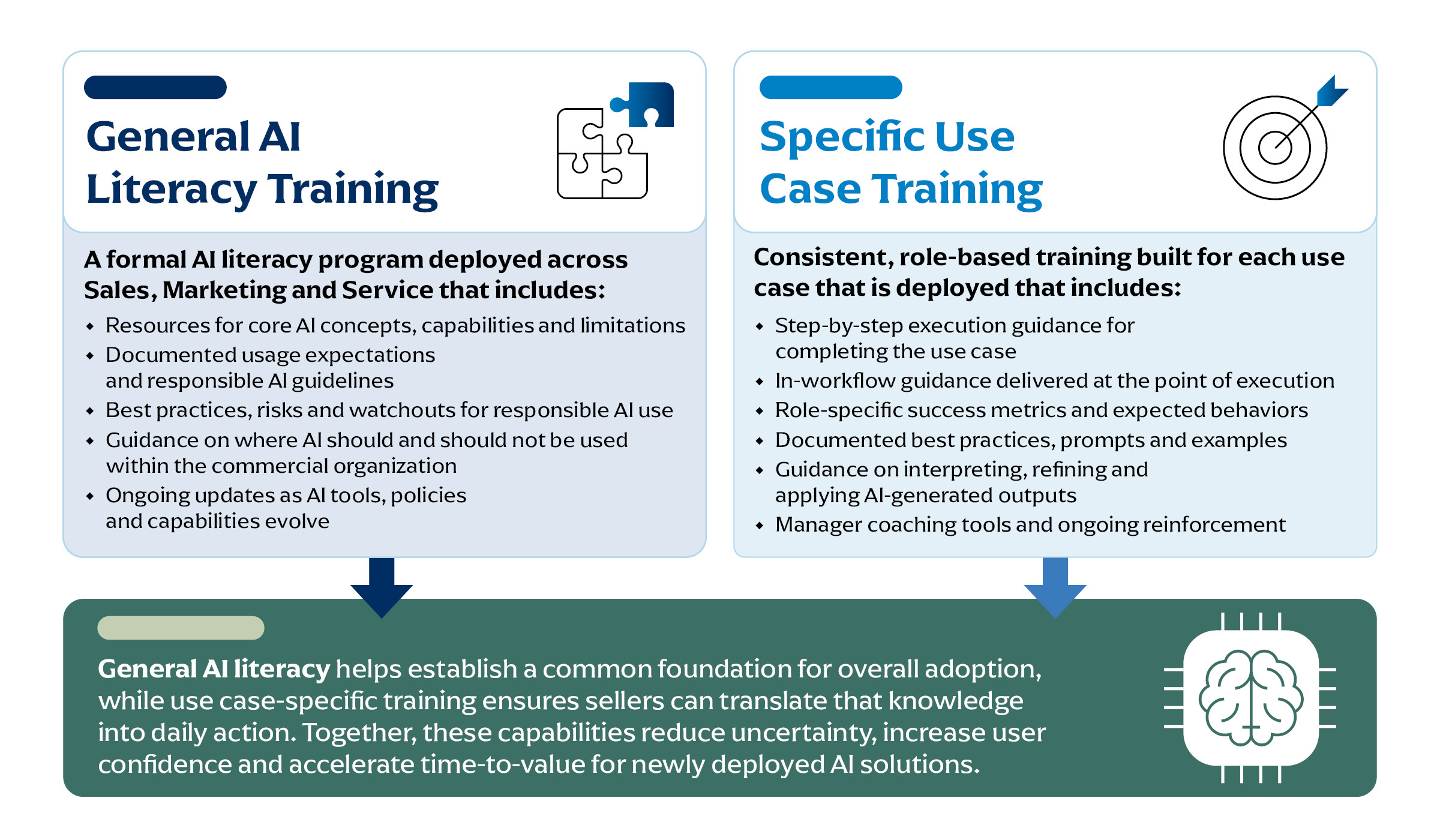
Ineffective AI training often begins and ends with a generic introduction to AI tools. With organizations deploying more AI use cases, sellers must understand more than only how AI works. They must also know when and how to use specific tools throughout the sales process.
Leading companies take a more structured approach by combining broad AI education with targeted use case training tied directly to seller workflows. This structure enables sellers to understand both the underlying concepts and the practical applications of AI, which then helps move sellers from experimentation to consistent AI usage.
Top organizations that excel in AI training focus on two key areas:
AI Change Management and Adoption
Organizations are deploying a growing number of AI use cases, which makes maintaining consistency across rollouts an increasingly difficult task. Without a structured approach to evaluation, deployment and reinforcement, successful pilots often struggle to scale beyond a limited group of users.
Best-in-class sales teams establish repeatable processes for introducing, evaluating and scaling AI initiatives. Rather than treating each deployment as a standalone effort, they create standardized approaches that provide structure throughout the change management and change adoption processes. This allows organizations to gather feedback, adjust and expand successful use cases more effectively as AI investments grow.
To do this effectively, organizations must establish two primary practices:
Sales Training
The goal of widespread AI adoption is to improve sales performance through productivity and efficiency gains. While AI can surface insights, identify opportunities and recommend next actions, it cannot replace the foundational selling capabilities required to engage customers and close large deals. Sellers must still know how to tailor messaging, navigate customer buying processes, handle objections and advance opportunities.
Top sales leaders understand that AI is most effective when paired with well-trained sellers who know how to apply AI-driven insights within established sales motions. Rather than viewing AI as a replacement for traditional seller development, they continually prepare sellers to execute the go-to-market strategy by providing access to training content, pricing tools, sales playbooks and other enablement resources.
AI can help sellers work faster and make better-informed decisions, but it can’t replace the human judgment required for effective B2B sales. Strong seller training is still a critical component of AI talent readiness, and organizations that continue investing in seller development are better positioned to convert AI-driven recommendations into measurable sales results.
Unlocking Value Through AI Talent Readiness
While discussions about AI success often focus on technology and data, Alexander Group research suggests that AI talent readiness also plays a critical role in determining organizational adoption and sales outcomes. By strengthening AI training, adoption practices and sales capabilities, commercial leaders can create the foundation needed to scale AI in their organizations.
[1] AI portfolio defined as the suite of generative AI use cases deployed across the commercial organization. Portfolio success defined as the percent of deployed AI use cases achieving high positive ROI. High positive ROI defined as scoring 5+ on a 7-point sentiment scale for a use case.
[2] AI Talent Readiness is an average index score comprised of five variables across three capability areas: AI Training (General AI Literacy Training and Specific Use Case Training), AI Adoption and Change Management (AI Rollout Change Management and AI Change Adoption) and Sales Training (Seller Training). Each variable is measured on a seven-point effectiveness scale. Organizations with average index scores of 6 or higher are classified as having high AI talent readiness, while scores of 5, 4 and 3 or below are classified as medium, low and minimal AI talent readiness, respectively.