

Medical Device Marketing Transformation: Filling the Sales-Marketing Gaps

In today’s MedTech industry, Marketing, Revenue and Sales must align on their go-to-customer strategy and the day-to-day activities required to execute it successfully. Oftentimes, this is easier said than done as strategy evolves, new priorities arise and reorganizations uproot existing team structures. Nevertheless, commercial leaders must strive for maximum alignment between sales and marketing.
Challenges in MedTech Marketing
Alexander Group has identified three primary gaps or challenges that many of today’s MedTech marketing organizations face. These include:
- Balancing product expertise with customer centricity
- Lack of clarity around marketing roles, responsibilities and rules of engagement with sales
- Limited rigor around key marketing processes
Product-Centric Bias
Marketers tend to focus on the clinical features of the medical technology. They might emphasize specifications and efficacy data. While these serve a purpose, the technology’s economic value story is even more important. This value is crucial for hospital C-suites. The focus involves customer centricity, connecting technology to customers’ goals.
Role Ambiguity
Many MedTech companies lack clarity about their marketing teams’ roles and responsibilities. This uncertainty can create ineffective engagement with sales. For example, Marketing may view Revenue and Sales as noncompliant with lead follow-up protocols.
Process Rigor Gaps
The marketing sphere may launch ad hoc campaigns rather than structured demand generation. These marketing activities fail to feed a predictable revenue pipeline.
Practical Steps for Closing Gaps
When organizations can identify the gaps that hold them back, they can begin to close them. Their work improves market penetration and drives revenue growth. Often, the gap-closing process involves addressing structural concerns rather than surface-level communication fixes.
1. Realigning Processes
Realignment can help add structure to sales and marketing processes and create more predictable revenue. The realignment process may involve establishing a universal qualified lead definition. Additionally, sales feedback informs marketing content. As a result, content provides a smoother avenue to sales.
During process realignment, teams can track the effectiveness of their improvements. Metrics like deal quantity, quality and velocity enable companies to see how process improvements affect performance.
2. Investing in Shared Tools
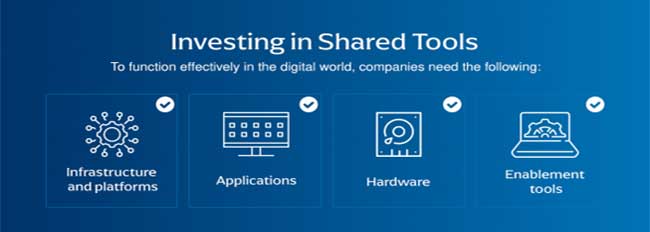
Technology forms the core of today’s sales and marketing operations. To function effectively in the digital world, companies need the following:
- Infrastructure and platforms
- Applications
- Hardware
- Enablement tools
Shared tools can help teams work together more effectively. An integration between customer relationship management (CRM) and marketing platforms offers a single source of truth. Companies should also use technology to automate the handoff of qualified leads. Marketing provides full context to streamline next steps and improve sales.
3. Rethinking Team Structures
Thoughtful restructuring can help MedTech organizations solve the disconnect between sales and marketing. The restructuring process may vary by organization. For example, a product-based structure might help teams focus on specific projects. Segmentation focuses on dividing teams by customer demographics to deliver more targeted campaigns.
When rethinking team structures, start at the top. A chief revenue officer could help unite the groups. This professional creates a structure in which both report to a single leader. Additionally, hybrid roles that blend the two teams could improve results.
Transforming a MedTech Sales Strategy for a Global Company
A recent case study with one division of a global medical device manufacturer highlighted each of these gaps. Alexander Group assisted the company’s sellers in a sales transformation from a multi-siloed, product-centric structure to a more consolidated, customer-centric view. Though this sales transformation was producing strong results, leadership believed other functions in the commercial organization—namely marketing—were not appropriately structured and staffed to maintain the desired growth rates. Alexander Group partnered with the head of marketing to embark on a marketing transformation.
Identifying Organizational Challenges
To begin, we assessed the marketing organization and discovered:
The marketing team’s product-siloed reporting structure created misalignment with both the sales organization and customers. There was no clear owner of customer-specific strategy, intelligence or accountability. Though the marketing team needed to retain product knowledge, they also needed guidance to become more customer-centric.
There was a lack of job clarity among the team. Marketing specialists struggled to manage responsibilities like gathering market intelligence, defining sales strategy, product support, product training, performance analysis and reporting, RFP response and supply chain management, to name a few. The employees were not properly executing the external commercial resources because there was no solid process in place.
A lack of well-defined marketing processes resulted in major inefficiencies and an overreactive, stressful work environment.
All of these factors resulted in core, fundamental marketing responsibilities going ignored, most notably:
Developing a New Organizational Structure
Finally, Alexander Group worked with the marketing leadership to design a new organizational structure with four functional families:
- Market/customer segment strategy
- Product management
- Content generation
- Demand generation
This structure created greater specialization and a narrower job focus for both management and employees. There were now clear owners of underserved responsibilities, such as content development and account-based marketing execution.
We also developed detailed process maps for key marketing activities (e.g., RFP response, sales training, deal approval) to better clarify roles and responsibilities tied to foundational marketing activities. Lastly, Alexander Group developed playbooks to assist with the rollout and communication of the new organization.
Enhance Results With Support
Organizations seeking to enhance their medical device marketing strategies often benefit from knowledgeable support. The case study above demonstrates the results Alexander Group has achieved for MedTech companies. We have helped over 3,000 companies achieve revenue growth. MedTech is a core industry served. This focus gives specialized insight into the strategies that work best for achieving results in healthcare ecosystems.
We contribute an end-to-end approach to aligning Revenue and Sales with Marketing. Alexander Group helps companies gain a competitive edge in the MedTech space. This holistic approach connects upstream marketing to downstream sales to prevent strategy-execution gaps. An alignment of process, tools and structure enables organizations to transform marketing. It shifts from a cost center into a scalable revenue engine that outperforms market growth.


Transform Your Marketing Strategy
In the MedTech industry, gaps often exist in marketing and sales. Are your Marketing, and Revenue and Sales teams experiencing these key gaps? We have proven strategies to close them and enhance your success. Let Alexander Group’s revenue growth leaders assist in developing your roadmap to success.
